I thought my future was over but losing my leg was just the start of an incredible journey.
By Annabel Kiki, 16
As I sprinted across the pitch, something made me gasp.
‘Are you all right, Annabel?’ my football coach asked.
‘It’s my leg,’ I groaned. ‘It’s been sore for ages. I’m worried I’ve done something to it.’
At 13, I was mad about sport – everything from football to skiing to swimming.
So, when I first felt a pain in my leg, I thought
I must have strained it but, instead of getting better, it just seemed to get worse.
One afternoon it was so bad, the school called my mum Sally and she took me to hospital near our home in Cannock, Staffordshire.
I had an X-ray and I could see from the nurse’s expression that the news wasn’t good.
‘It doesn’t look normal,’ she told me.
Over the next few days I had no end of tests, including MRIs, CT scans and a biopsy.
‘The results are in,’ the doctor told me. ‘I’m so
sorry, but you have an osteosarcoma in your leg.
It’s a type of bone cancer.’
I went into a state of shock.
‘It’s very rare,’ the doctor told me. ‘Only about 30 people get it a year. It’s not due to lifestyle or genetics, it’s just random.’
Doctors told me I’d be starting the world’s strongest chemotherapy as soon as possible.
‘In terms of further treatment, you have a choice,’ the doctor explained. ‘You can have the leg amputated, or you can have what’s known as limb salvage surgery.’
'It's been sore for ages'
The salvage surgery would save my leg but the metal prosthesis they’d fit in place of a bone would mean that I’d never run, jump or play football again.
‘Absolutely not,’ I said. ‘I’d rather have the amputation.’
Doctors warned me that there was still no guarantee that I’d be able to play sports again, but I knew I had to try.
A month after my diagnosis, I started chemotherapy.
The side effects were brutal. I suffered from horrific mouth sores, hair loss, fatigue and sickness, as well as developing sepsis.
One afternoon, as
I was lying in my hospital bed, I hit rock bottom.
I was watching football on TV and, seeing the players running around the pitch, I was utterly desolate.
‘What if I can’t ever play sports again?’ I asked Mum.
‘There’s nothing to gain from letting your heart shatter,’ she told me.
She’d been my rock through my treatment, always at my side, sleeping on the hospital chair overnight so she didn’t have to leave me, even for a minute.
And hearing her words really marked a turning point.
Three months after my diagnosis, my left leg was amputated.

But I was determined to make the most of my new life and to throw myself headfirst into everything.
Within days of my surgery, I was up walking on my crutches, and within months
I was fitted with my new prosthetic leg.
It felt incredible to be up on my feet again even though, at first, it was a real struggle to keep my balance.
Mum would take me down to the freezer aisle in Asda, where I’d hold on to the handrail and practise walking up and down.
Almost a year after my diagnosis, I jetted off to Bulgaria on a skiing trip with my mum.
‘I don’t see myself as disabled,’ I told Mum. ‘I want to do everything people think I can’t.’
Not long after, I was on social media when I spotted
a tweet about an amputee women’s football camp in Poland and sent a reply.
I wish we had something like this in the UK.
When they asked me to join them, I was ecstatic.
I flew to Poland and met an entire team of other young footballers all with amputations.
Because of our shared struggles, there was an automatic camaraderie between us and I made friends for life.
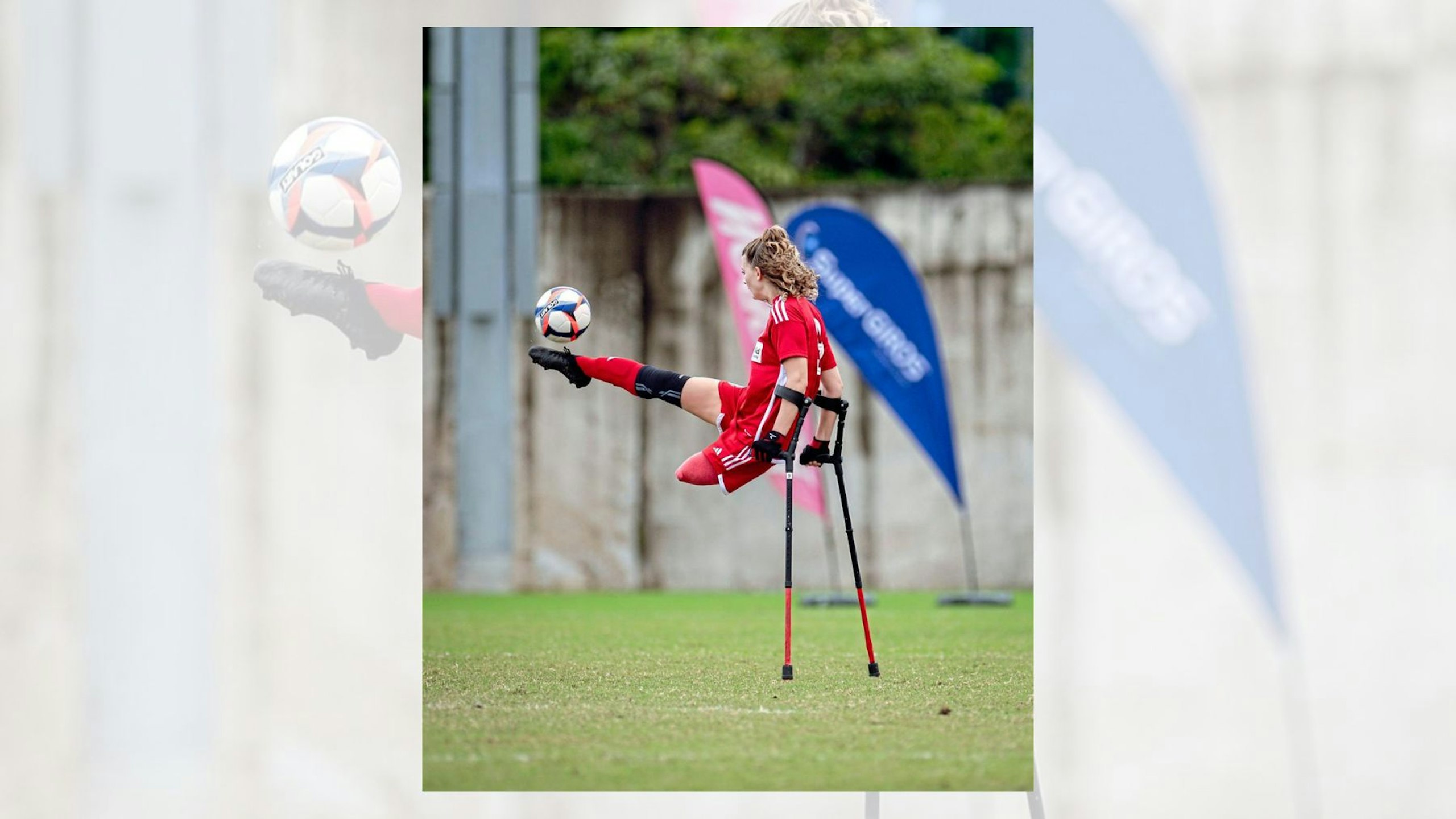
Another player and I set about getting a UK team together for the first ever women’s amputee football championship in Colombia and raised £50,000 for the trip.
Aged 16, I helped the team to fifth place and won the Golden Boot award as top scorer in the tournament.
It was an incredible achievement. But my determination to live life to the fullest didn’t stop there.
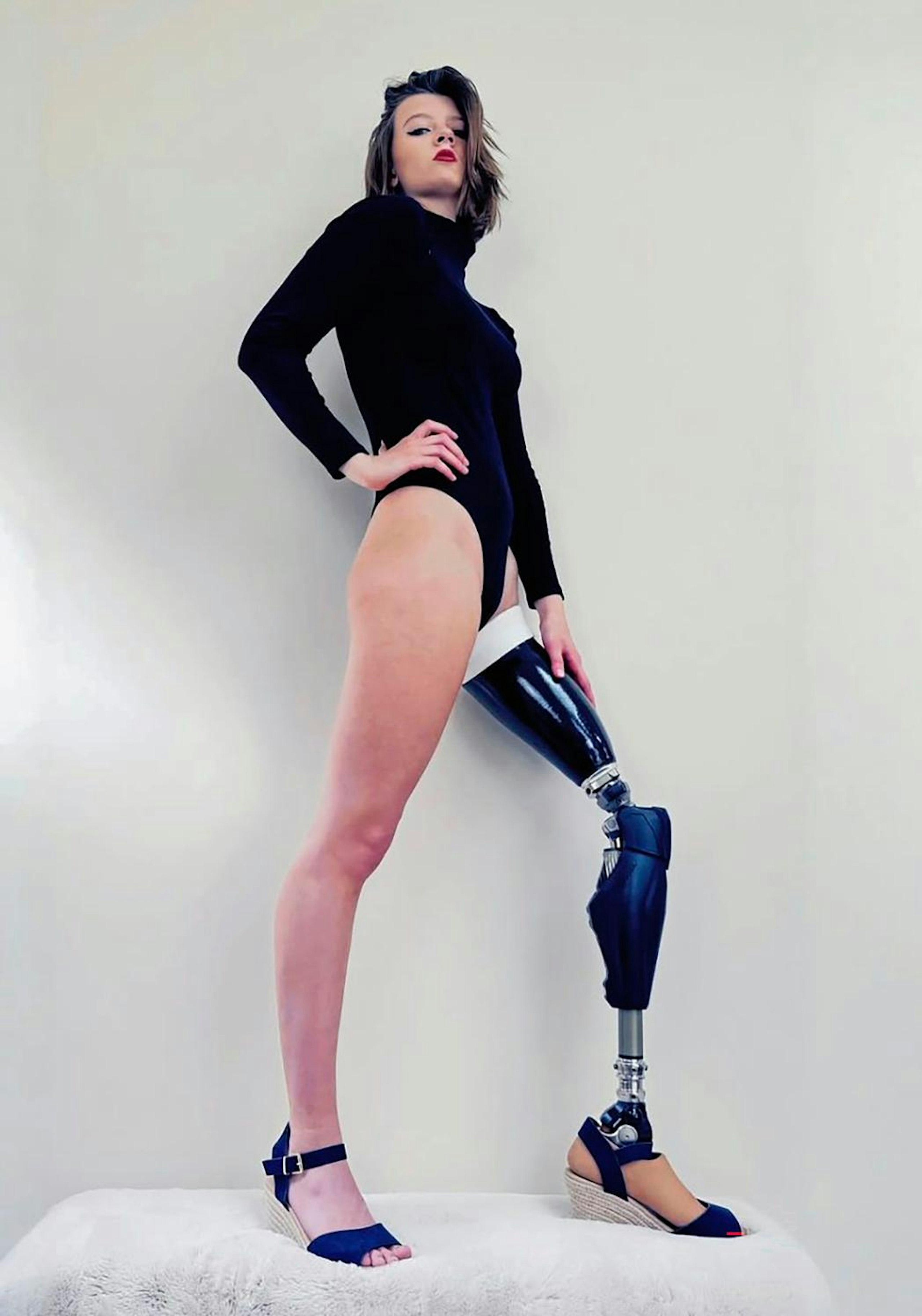
I’d always been a fashion lover and interested in modelling and now I decided it was time to try to make it happen.
I reached out to Zebedee Talent, the world’s leading inclusive modelling agency, and they signed me up. After I met the CEO of fashion magazine Fab UK, I was entered into their model competition and beat 155 others to win.
My title meant I had automatic entry into the Miss England competition.
It’ll be held later this year and I’ll be the first ever amputee contestant!
I love the contest’s beauty with a purpose approach because I’m not defined by the bad thing that happened to me.
I have a greater sense of purpose than I’ve ever had in my life.