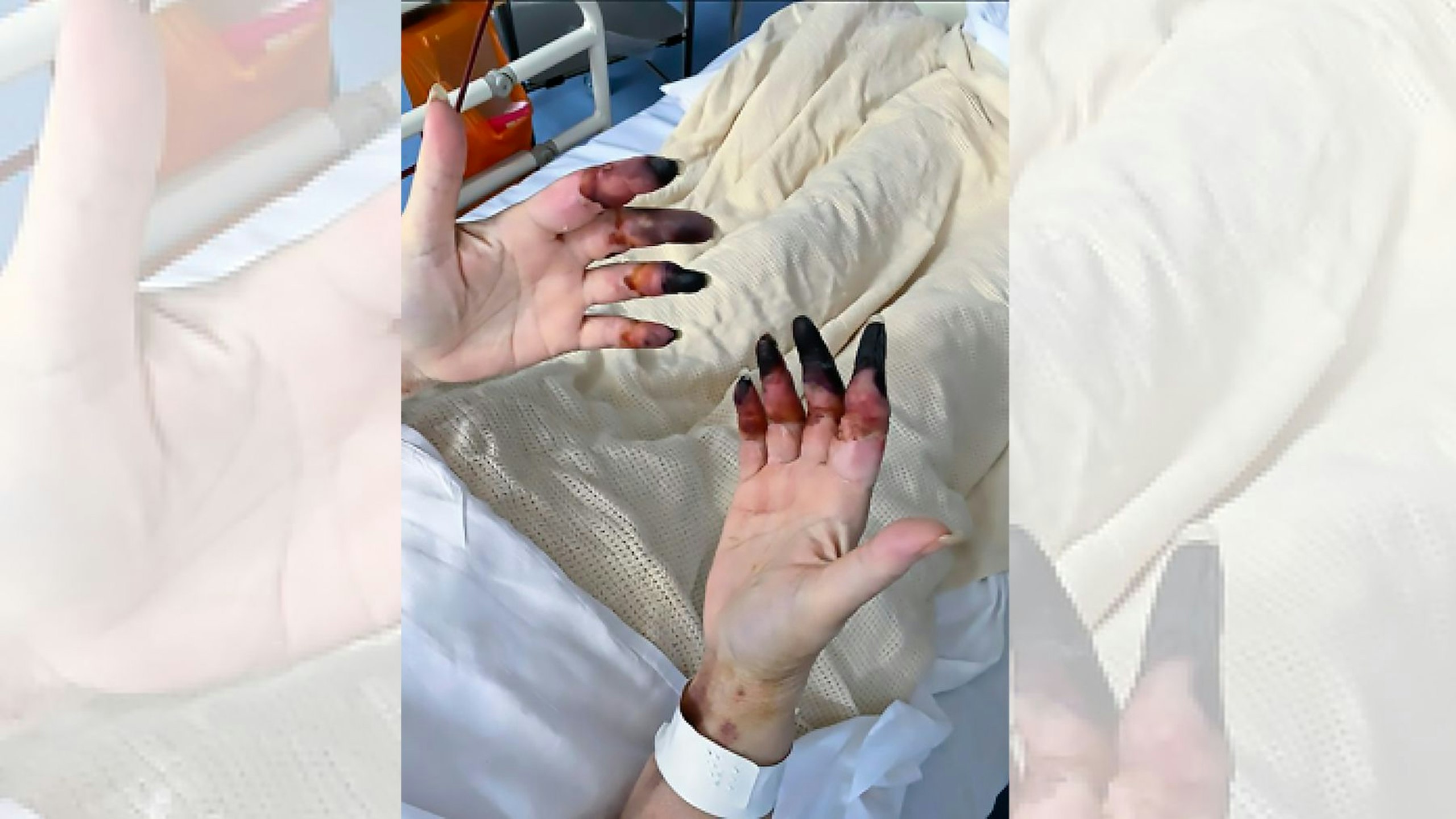
Looking down at her fingers, Louise gasped. What on earth was happening to them?
When I felt the stabbing sensation in my side, I recognised it immediately.
Wincing in pain, I pulled into a lay-by and rang my parents.
‘Mum, I’ve got another kidney stone,’ I gasped down the phone.
‘Get to the doctors,’ she urged. ‘We’ll meet you there.’
I’d had a kidney stone removed three years previously and the discomfort in my stomach was familiar.
Scans at hospital confirmed my suspicions.
‘It’s a fairly small stone,’ the doctor told me. ‘You should be able to pass it yourself without surgery.’
Dad drove me home, my prescription slip clutched in my hand.
Fortunately, a friend agreed to stay with me overnight and keep an eye on me.
We’d just finished dinner the following evening, when I was overcome by a violent wave of nausea.
Suddenly, I was fading in and out of consciousness.
‘Louise, stay with me!’ my pal urged.
She rang an ambulance and waited with me until it arrived in the early hours of the morning.
The journey to hospital was a total blur.
I was only vaguely aware of Mum arriving and of the staff taking my blood pressure and heart rate.
Then everything faded to black…
When I woke, I was woozy and confused, my stomach still in agony.
‘What’s going on?’ I croaked to the doctor.
‘You went into septic shock,’ he replied. ‘We’ve been fighting to keep you alive for four days.’
Despite their best efforts, they were unable to discover exactly what had gone so wrong.
And though I felt dreadful, I knew I needed to fight.
My 25-year-old daughter, Lauren, was not going to lose her mum.
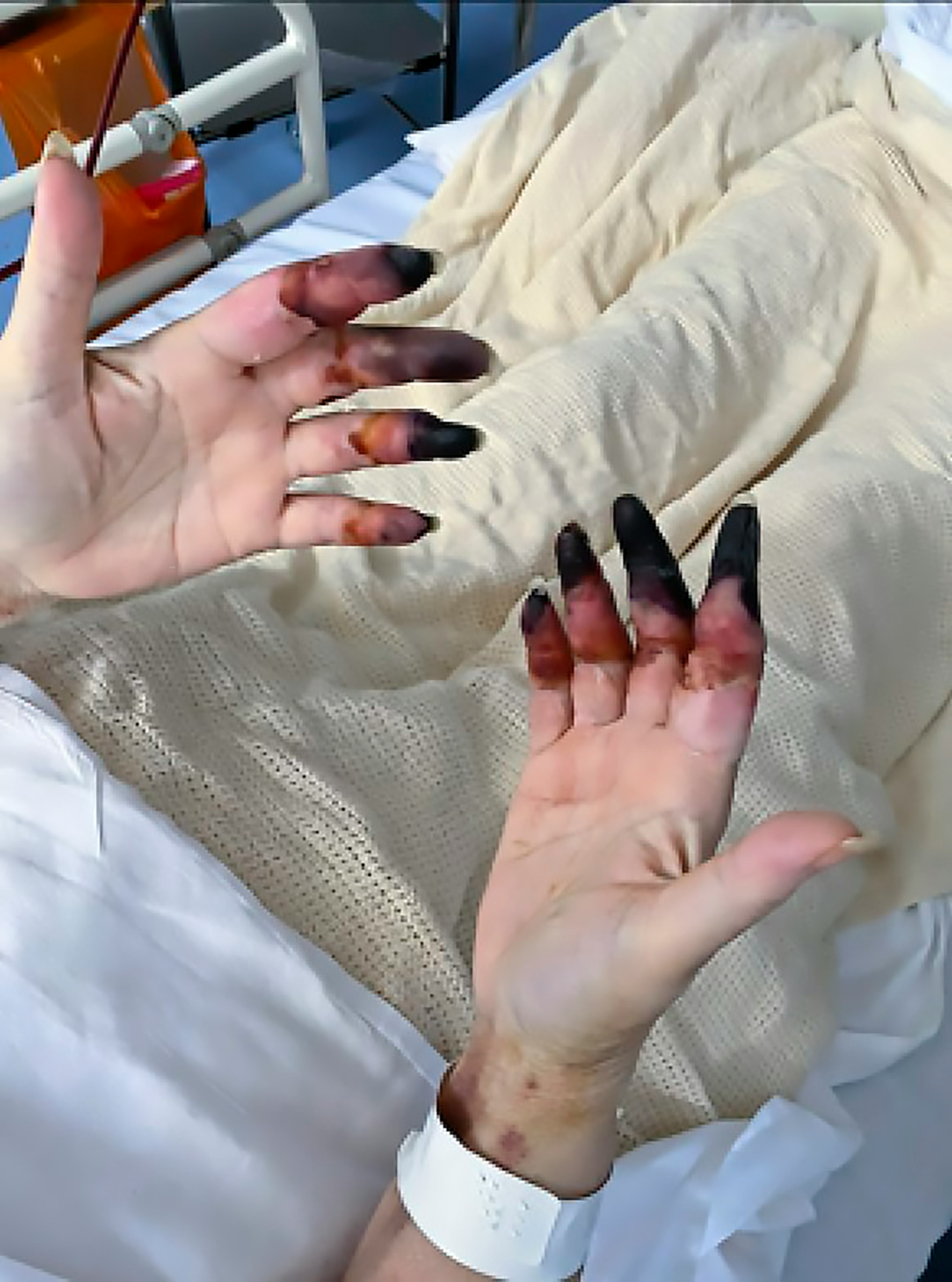
Days passed and, to my horror, my hands and feet started turning black and purple.
Not only that, but they felt icy cold, like they were stuck in a freezer.
‘What’s happening to them?’ I asked, groggily.
‘We had to restrict your blood flow to save your major organs from the sepsis,’ the doctor explained.
At first, I was too ill to think about it.
But as I began to improve, I panicked.
'We’ve been fighting to keep you alive'
‘Am I going to lose all my fingers and toes?’ I asked.
But doctors couldn’t be sure.
I prepared myself for the worst.
When Lauren visited, she was distraught.
‘But what will you do without your fingers?’ she said tearfully.
‘The main thing is, I’m alive,’ I told her. ‘We can still go on holiday, we can still celebrate Christmas together.’
Besides, I had other things to worry about…
After being in hospital for two weeks, my muscles had started to waste from lack of use.
I’d also lost the hearing in my right ear.
Six weeks on, doctors told me it would soon be time to go home.
While portions of my hands and feet had recovered, all my fingers and the toes on my right foot were still black and dying.
‘We’ll have to amputate,’ my plastic surgeon said, ‘but we’ll save as much of each finger and toe as we can.’
It was a lot to take in.
Upon leaving the hospital, at the age of 44, I had to move back in with my parents.
My dead toes meant my balance was wobbly and gripping onto things became impossible.
I couldn’t cook, shower, or even use a kettle by myself.
Four weeks after my release, I had all the fingers on my right hand amputated.
I was awake for the procedure, which meant I could look down and see my fingers being removed.
It was like something from a horror movie.
But the staff were lovely and so reassuring.
‘This is such a unique case’
Next month, on my 45th birthday, I had the fingers on my left hand and the toes on my right foot removed.
The doctors played Happy Birthday on repeat over the speakers.
‘You can change the music now!’ I laughed after the 50th rendition.
Though I’d seen how much was removed during surgery, I still gasped when my bandages were removed.
The remains of my fingers were swollen, bruised and had stitches in the tips.
I cried from pain and the shock.
But I was made of strong stuff, and knew I’d get through this.
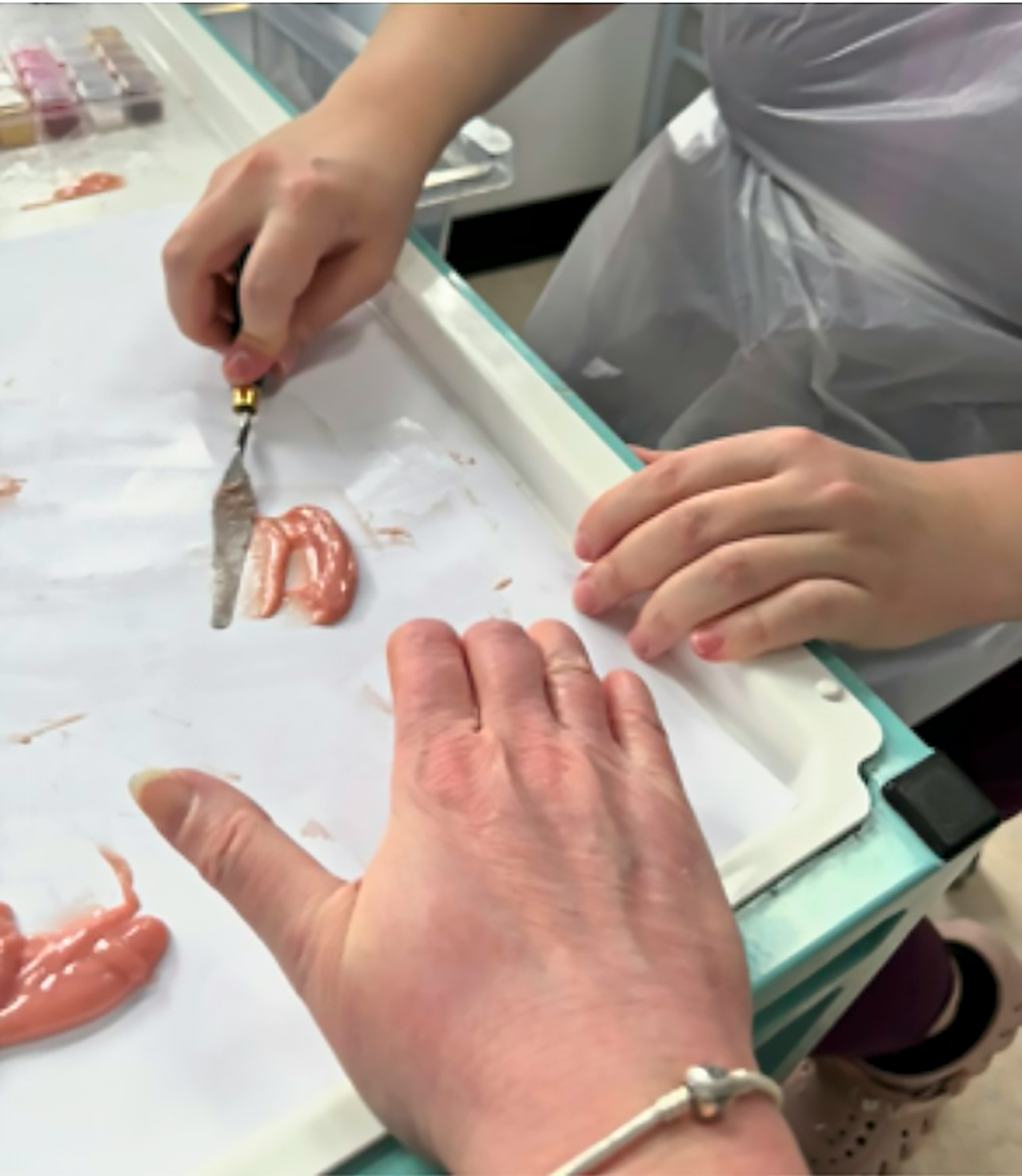
Not long after my second surgery, I was transferred to a prosthetics laboratory.
‘This is such a unique case,’ said the doctor. ‘Usually, we’d use remaining fingers to model the prosthetic, but obviously that’s not possible.’
Then, one of the technicians leant over to peer at and old photo of my hands that the doctor was holding.
‘My fingers look a pretty similar size to Louise’s before the op,’ she said.
And in an uncanny twist, it turned out she was right!
We’d had identically sized hands and fingers before my amputation.
It meant, along with old photos, doctors were able to figure out the correct dimensions to use.
Each of the fingers was carved from wax, then the moulds were made to create a silicone prosthesis.
I even got to choose the nail shape!
Finally, 18 months later, my fingers were ready.
When I first saw them, I couldn’t believe it.
They looked just like the real thing, right down to blue streaks for veins and intricate creases around the knuckles.
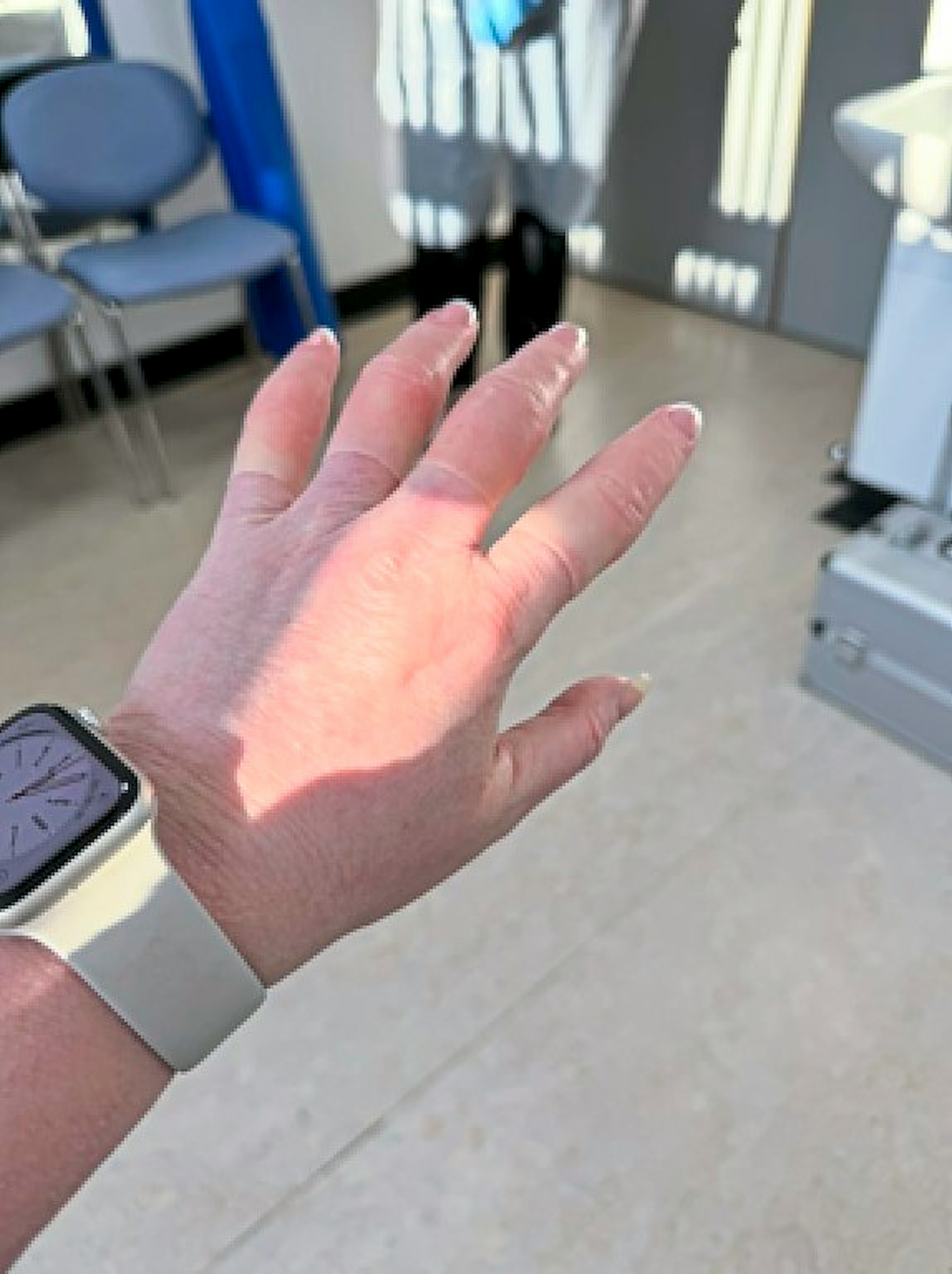
I was overwhelmed with gratitude to the team.
But, even so, the fingers were more for aesthetic purposes than practical use.
They didn’t bend, and the lack of sensation at the tips made picking things up difficult.
Though my dexterity was improving, I was still struggling to adapt.
Thankfully, there were plenty of solutions online for my lack of balance.
I installed a stool in my shower and in front of the hob so I could still cook.
But there were fewer options to improve my grip.
The stumps of my fingers were too thick to get underneath objects and pick them up the usual way.
I was constantly smashing plates or dropping my dogs’ bowls, spraying kibble all over the kitchen floor.
As a naturally independent person, it was maddening.
Determined to succeed, I tackled simple tasks – like buttering a piece of toast or using a make-up brush – with different methods and techniques.
Instead of swiping my phone screen with my fingers, I’d use my thumbs.
Reorganising my cupboards and buying specialist tools also helped.
Two years on, I finally felt ready to move out of my parents’ house.
A few months later, I was out for dinner and drinks for my friend’s 50th.
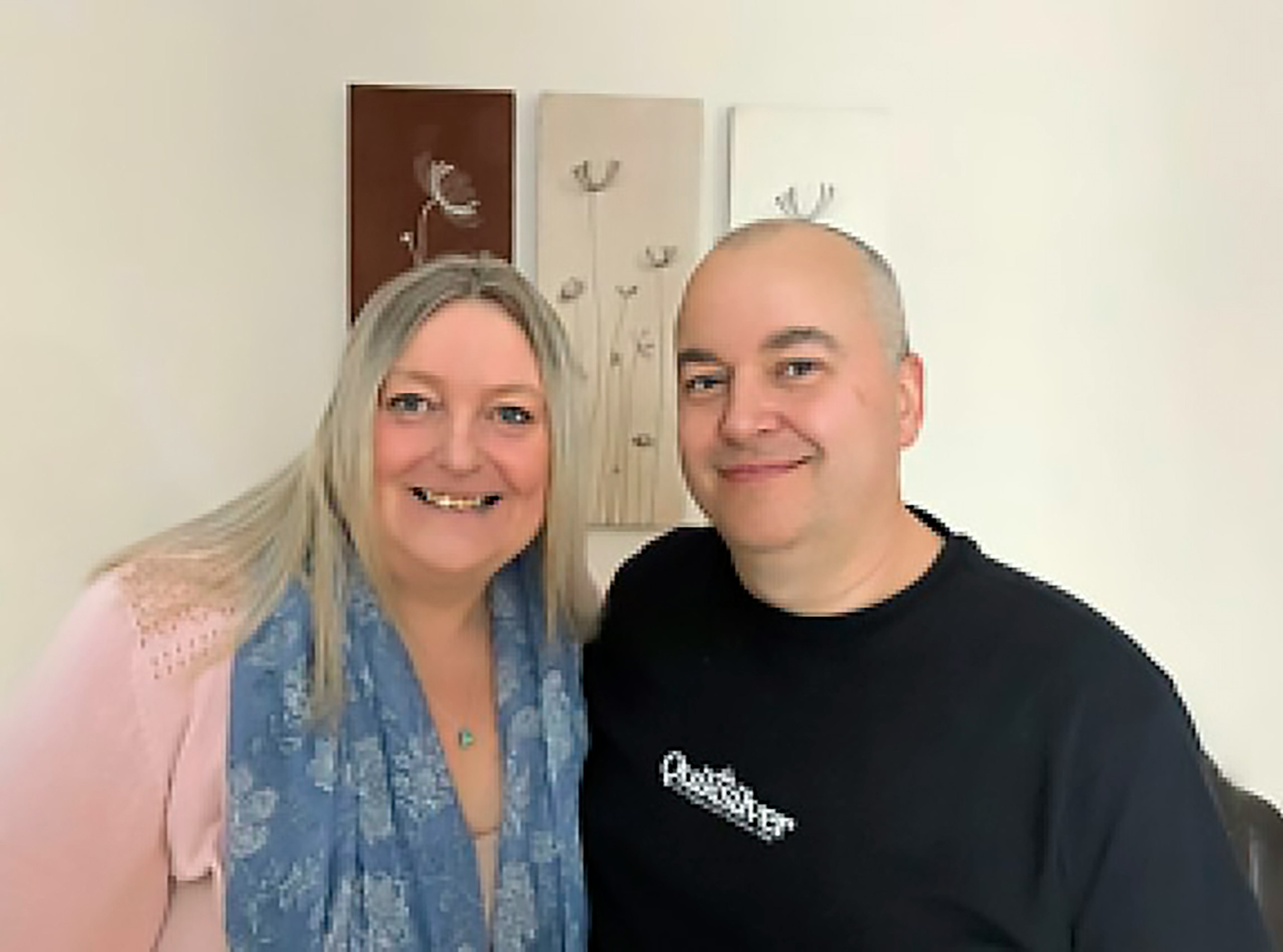
‘Hi John!’ said my friend, waving over at a guy standing at the bar. ‘How are you doing?’
It turned out he was her cousin’s ex-husband.
We all got chatting, and gradually everyone else peeled off until it was just me and John talking.
I wasn’t wearing my prosthetics, and I noticed him spot my missing fingers.
In the end, I explained the whole story to him, and he listened sympathetically.
‘Could I take you out to dinner?’ he asked at the end of the night.
‘That’d be lovely!’ I said.
I’d certainly never expected the story of how I lost my fingers to lead to anything romantic!
But we soon became a couple.
And he was a great help around the house with everything I was still struggling to master.
Now it’s been three years since I lost my fingers.
The nerve pain has continued far longer than I expected, and I rely on painkillers every morning and night.
The psychological stress has also left me with PTSD and flashbacks.
But I can’t forget I was on death’s door for a few days, and I’m so grateful to be here.
And, fingers crossed, things can only get better from here!
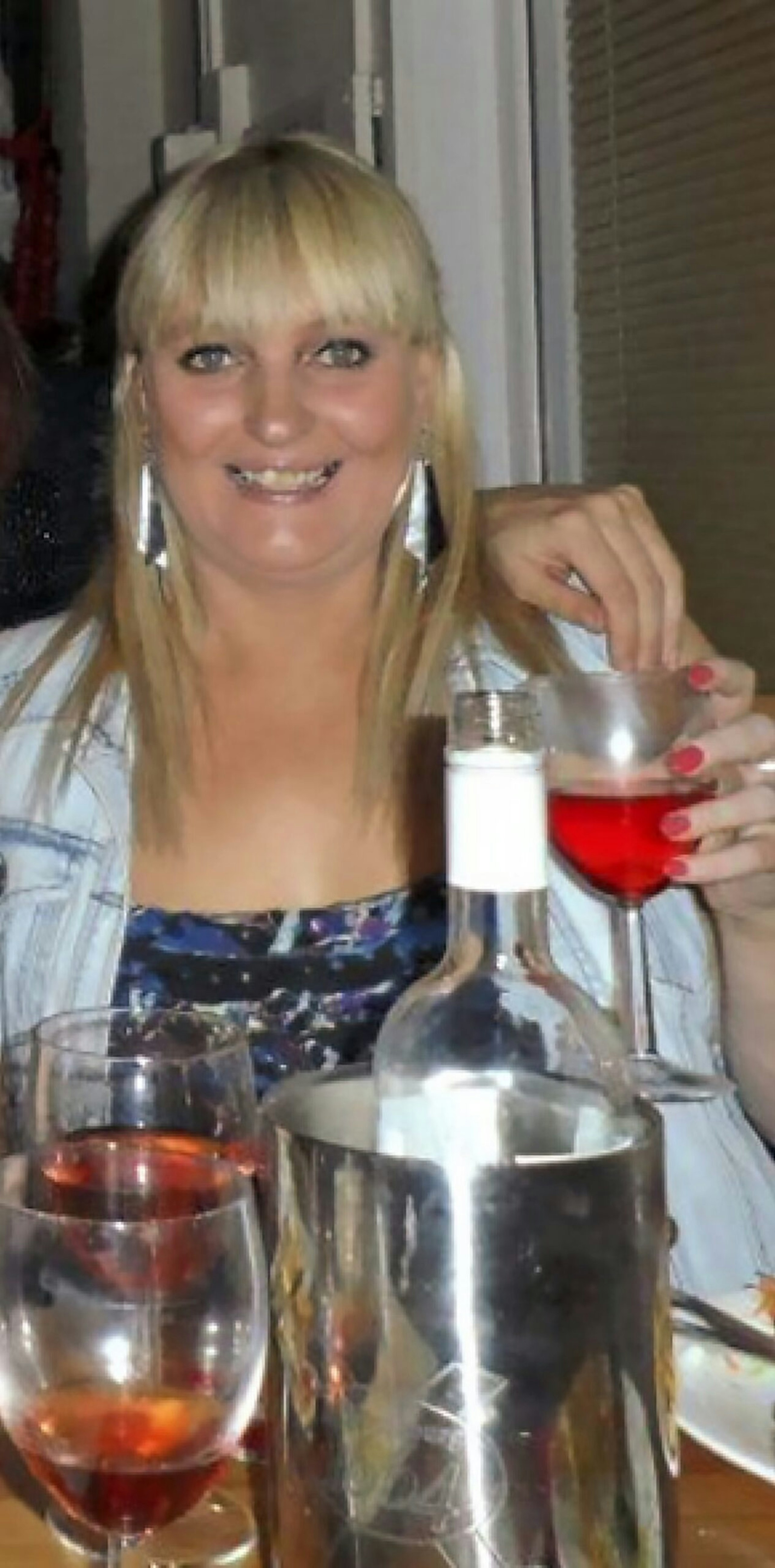
Louise Marshallsay, 48, Swansea