My baby girl Willow was just learning to sit up, when I noticed something worrying. By Lorna Christie, 35
Waking up refreshed after yet another full night’s sleep, I smiled at my gorgeous little girl in her cot.
‘We’re lucky to have such
an easy baby,’ I said to my partner Lee.
Willow really was a dream.
Lee and I already had three children between us when we got together.
When I found out I was pregnant again, we were delighted to add to our blended family.
Right from the start, Willow was a happy, smiley baby, sleeping through the night and rarely crying.
Soon she was sitting up, beaming at us with her toothy grin.
Yet something niggled me.
My little girl was certainly smiley and engaging.
But while other babies were already pulling themselves up in their cots, Willow would just lie there.
‘Surely I should be lowering the cot level by now,’ I said to Lee when Willow was nine months old.
‘She’ll develop in her own time,’ he replied reassuringly.
One day, Willow was sitting up on her playmat, when she just toppled over.
Then I realised she’d stopped moving her legs altogether.
‘I think we need to see the GP,’ I said.
But it was lockdown and getting an appointment was difficult.
'Do you think there's a link?'
It was then that Lee told me about his nephew Sol-John. He’d died 11 years earlier from a progressive, genetic condition called spinal muscular atrophy, or SMA, which makes muscles weaker and causes problems with movement. He’d been just three months old.
‘Do you think there’s a link?’ Lee asked.
I tried to remain calm and hoped there was another explanation, but deep down
I was terrified.
We finally managed to see
our GP, but were told we’d have to wait until Willow was at
least two before we could get her tested.
Back home in Irvine, North Ayrshire, I did some research and discovered the earlier the disease was treated the better, so I knew it was a race against time.
Eventually, we managed to see a physiotherapist who got us an appointment with a specialist.
The consultant realised Willow had no reflexes and asked us about our family history.
‘Do you think she has SMA?’
I asked.
‘We’ll have to wait for the blood test results,’ he replied.
That night, I sobbed, devastated at what this meant for our family.
By now, I was pregnant again so I was also frightened our new baby might have the condition too.
Days later, we were called back to the hospital where
the doctor confirmed our
worst fears.
‘I’m afraid Willow does have SMA,’ he said. ‘We need to test you both to see if you’re carriers.’
The thought that Willow would never be able to do the things other children took for granted was devastating.
And now, we had an anxious wait to see if our unborn baby had the condition too.
‘What if we’re faced with bringing up two disabled children?’ I fretted to Lee.
But thankfully, although we were both carriers, doctors confirmed our unborn baby was unaffected.
While that was a relief, we now had to focus on getting the right treatment for Willow.
At first, doctors offered her
a drug which had to be administered by spinal infusion under general anaesthetic every three months.
It sounded brutal.
‘I don’t want to put her through that,’ I said to Lee, although I knew we might have no other choice.
Then one evening, I was watching the news when a report came on about a new trial drug to treat SMA called risdiplam.
‘Lee, look at this,’ I said.
Given orally, it sounded much kinder than the option we’d been offered.
Next day, I managed
to contact the doctor involved in the trial. And weeks later, Willow was approved to start the drug.
By now, she was 14 months old and could no longer sit up. She was also having trouble with her breathing.
But within weeks of taking the drug, everything changed.
Willow was no longer toppling over. She could breathe more easily and move her legs for the first time in months.
We knew she’d never walk and run like other children, but just seeing her getting stronger was incredible.
Our biggest joy was when she started to crawl at the age of three and half.
It’s something most babies do at less than a year, but for us, it was a huge moment.
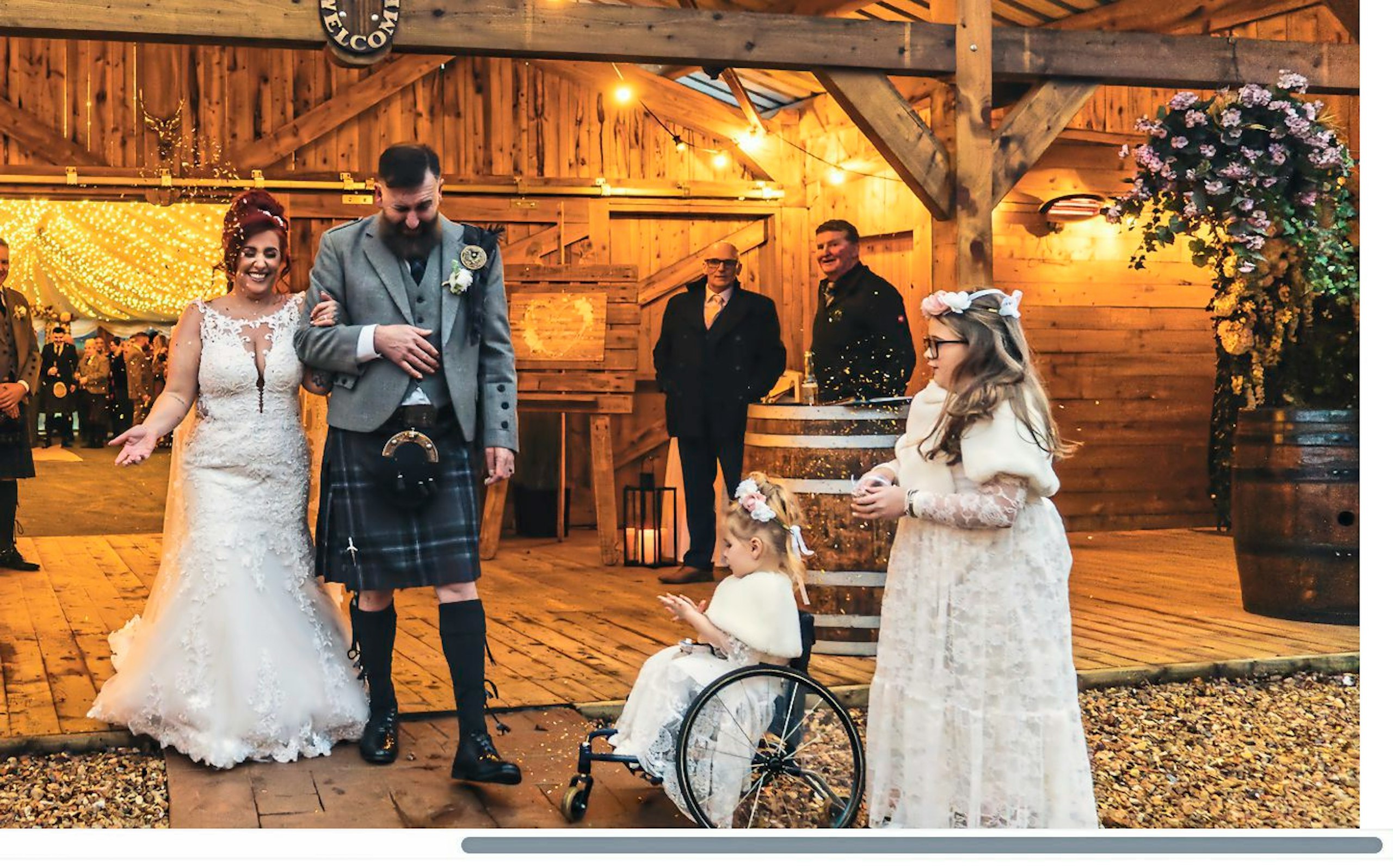
And when Lee and I got married, Willow and her big sister Morgan, 10, were flower girls, while her brother Harris, two, and our other sons Jack, 15, and Cameron, 16, were pageboys.
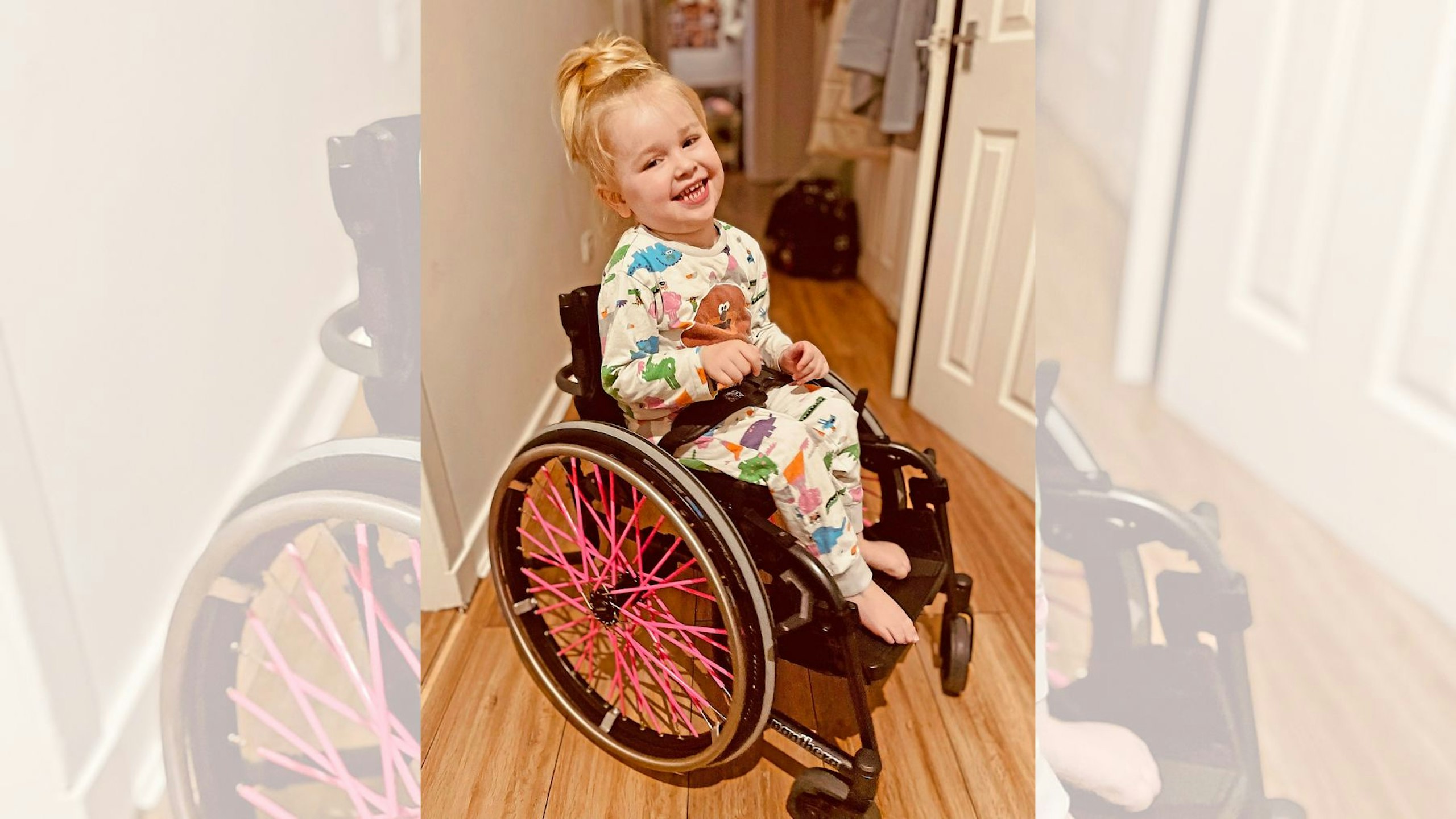
Willow now has a special wheelchair for when she’s out and about, but at home she’s strong enough to shuffle around on her bottom.
We’re campaigning for all newborn babies to be screened for SMA, which already happens in the US and some European countries.
If they test positive, there’s now a drug available on the NHS called Zolgensma, which prevents the condition developing with just one dose.
The drug is too late for Willow, who’s now almost four. But she’s thriving and happy and brings joy to our lives
every day.
We couldn’t be more proud
of her.
● Follow Willow’s story on Instagram @willowsjourney_sma_type2. Visit smauk.org.uk for more information about SMA.