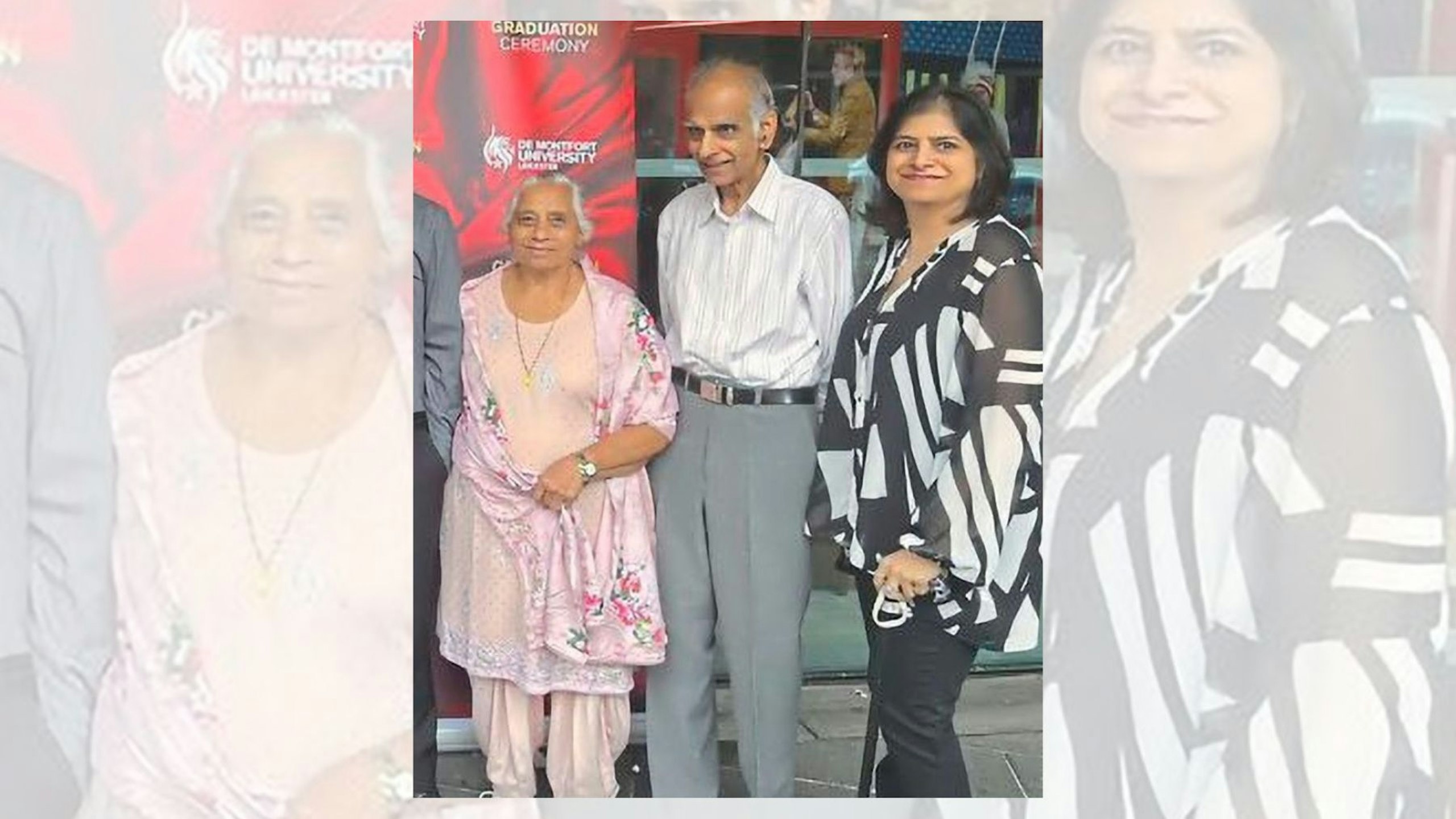
Dad had taken our dog for a walk in the park. But a shocking encounter was about to change our lives forever… By Susan Kohli, 51
After hanging up a top, I turned my attention to a pile of dresses.
‘Pop those up there,’ my dad Bhim said, pointing to an empty rail.
Seagulls wheeled overhead and fresh sea air of the Kent coast filled my lungs.
My two older brothers and I were helping Dad on his market stall, but we couldn’t wait to dash down to the beach afterwards.
As the morning passed, I enjoyed listening to dad’s friendly chat with customers.
After a few hours, he turned to us with a smile
and said, ‘Off you go,’ and
my brothers and I raced happily down to the sand.
When I was 11, we left the seaside behind and moved to Leicester, where Dad opened a textiles factory.
Just as I’d watched him run his market stall, I enjoyed learning how he ran his
new business.
But in time, the textile trade started to dwindle.
‘I’ve got to close the business and retire,’ Dad
said eventually.
But I knew that he’d need something to keep him occupied.
‘He can’t sit still,’ I told Mum. ‘He’ll go mad.’
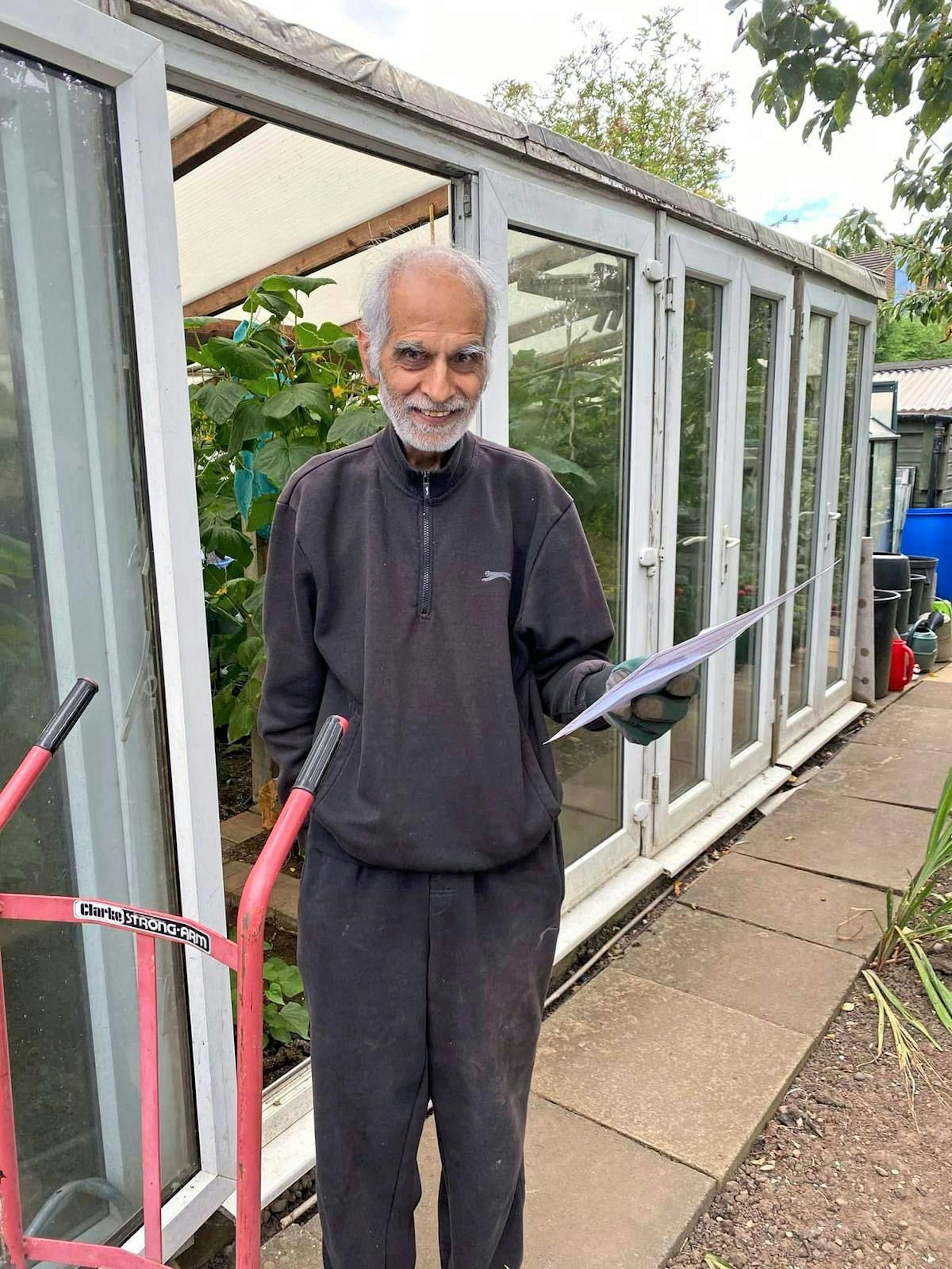
She agreed, so we were pleased when he took on three allotments over the road from our house.
That first summer,
he came home, proudly showing
us the tomatoes
and cucumbers
he’d grown.
He planted
fruit trees, harvesting
apples, plums
and cherries.
And we weren’t the only ones who benefitted from his harvest. Laden down with vegetables, Dad would knock on neighbours’ doors.
‘Thanks, Bhim,’ they said, gratefully taking his produce.
But green fingers didn’t run in the family.
When he and Mum went away on holiday one time,
he left me in charge of the seedlings he was growing.
‘It’s easy,’ he said, giving me instructions on how to care for them.
'They spat at me and racially abused me'
But I was hopeless with tending to plants. By the time he returned, the seedlings had wilted and died.
Dad didn’t grumble, but
he never asked me to look after his plants again!
In time, I left home to get married.
But it was an unhappy marriage, and when it came to an end after 18 months,
I returned home to live with Mum and Dad.
Dad had reached the age
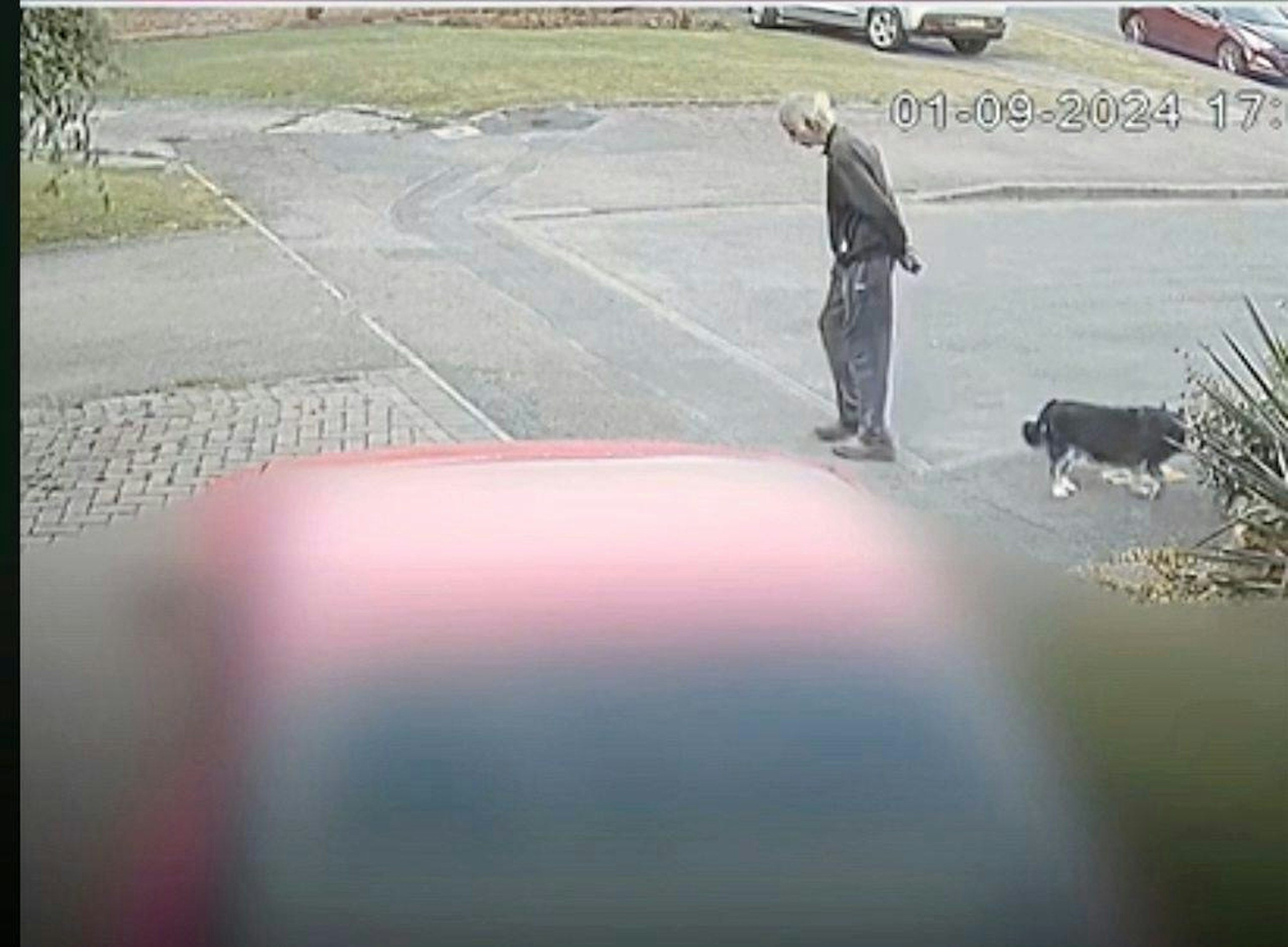
of 80, but remained active. When he wasn’t at his allotments, he’d take Rocky, our border collie and terrier mix, to the park next to our house.
When Rocky was younger,
he’d bound along in front
of Dad, but as he aged, he walked slowly behind.
Two or three times a day, the pair of them would disappear off for a stroll.
But in the area where we lived, there had been trouble with youths. And one day, Dad came home shaken.
He explained how he’d
told a group of children to get down off the roof of a neighbour’s garage.
‘They spat at me and racially abused me,’ he said, shaking his head in disbelief.
We reported it to the police.
Then, a couple of weeks later, Dad and I heard shouting outside our home.
We looked outside to see a man being racially abused by a group of youths.
I took out my phone and began filming evidence as stones were thrown towards the man.
When the aggressors picked up a big log, Dad and I flew out to intervene.
The incident was reported to police.
A couple of weeks later, it was early in the evening and I was upstairs in my bedroom. I’d been diagnosed with MS and sometimes had to rest.
I heard loud voices and, wondering what all the commotion was about, stuck my head out the window.
I spotted my nephew hurrying towards our house.
‘What’s happened?’ I shouted down.
‘It’s Grandad,’ he said.
‘He’s been attacked in the park.’
My heart thumped in fear.
I raced downstairs and my nephew and I dashed over to the park. There, I found Dad lying on the ground.
He was crying out in
agony, and I crouched down by his side.
‘In a balaclava,’ he muttered, desperately trying to tell me who’d attacked him.
Poor Rocky was trembling in fear.
We called an ambulance, who took Dad to hospital.
He was conscious, but
in great pain.
‘Pull the blanket over my shoulder,’ he asked, as I sat beside him. ‘There’s a draught.’
At hospital, it was discovered that Dad had suffered a broken neck and
three broken ribs.
I couldn’t believe that someone would do this to
a kind and defenceless 80-year-old man.
A wave of dread washed over me when doctors told me that he would need surgery, but would likely
be paralysed.
‘But least he’ll still be
alive,’ I said.
I rang Mum and she hurried with my brother
to join us.
Dad was due to be transferred to another hospital.
But by the next morning, his condition had further deteriorated.
He looked so fragile as he lay unconscious, surrounded by tubes and wires.
‘Come on, Dad, you’re a fighter,’ I whispered. ‘You need to get back here, you need to get back
to your allotments – you know we can’t do it!’
But four hours later, with my heartbroken
family gathered round, Dad
slipped away.
He’d died 26 hours after he’d been attacked.
As we struggled with our grief, we discovered that a 14-year-old boy and a 12-year-old girl had been arrested and charged in connection with the attack
on Dad.
A postmortem found he’d died as a result of his neck injury, which had caused spinal-cord damage.
We held Dad’s funeral,
and I cried as our community took us in their arms and surrounded the hearse in a mark of respect.
Months later, I sat in Leicester Crown Court,
where I listened to the sickening cruelty that Dad had endured.
The boy, now 15, had racially abused, kicked and punched him.
As my poor Dad slumped to his knees, the boy had taken off one of his slider shoes and slapped Dad in
the face with it.
Dad had tried to get away, but the boy had prevented him from leaving the park.
The girl, now 13, had encouraged the attack, and filmed it on her phone while laughing.
I was horrified when I saw the footage.
'Come on, Dad, you're a fighter'
After the attack, they’d
left Dad crumpled on the ground, and ran off to join friends, laughing and bragging about the attack.
At the end of the six-week trial, the boy and the girl, who couldn’t be named
for legal reasons, were convicted of manslaughter.
Later, they returned to court for sentencing.
The boy was sentenced
to seven years in custody,
and the girl was given a youth rehabilitation order
of three years and made subject to a six-month curfew.
I held my head in despair. It felt too lenient.
I filed a request for the boy’s sentence to be reviewed. But the Court of Appeal rejected moves to have the sentence increased.
I started campaigning
for tougher sentencing of youths who commit this
sort of violent crime, and
I also wanted parents to be accountable for the criminal actions of their children.
Those responsible for
Dad’s death weren’t adults, but they knew the difference between right and wrong.
Now, we’ve kept only one of his allotments because we can’t tend to all three.
Rocky hasn’t been the same since Dad died. We all miss him terribly.
The park where he was attacked is on our doorstep, and whenever we walk out
of the house it’s a reminder of what happened.
But it won’t drive us away, and in time, we hope to mostly remember all the happy times we spent together as a family in
our loving home.